
Automotive wind tunnel testing is a crucial component in the research and development of the modern automotive industry. As the industry’s demands for vehicle performance continue to rise, the technical standards for wind tunnel facilities have become increasingly stringent. Today, we will explore the basic aspects of an automotive wind tunnel testing center and the critical role of endless steel belts within it.
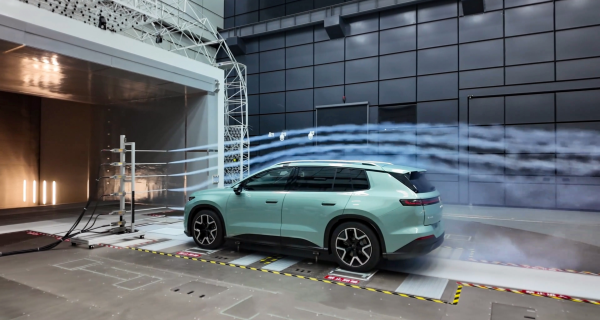
What is the purpose of the automotive wind tunnel testing center
The wind tunnel testing center is a specialized laboratory that can simulate the actual driving state of a car indoors. During the testing process, the vehicle remains stationary and securely positioned, while high-speed airflow is generated by a fan system in front of the vehicle. At the same time, a conveyor belt system installed beneath the vehicle runs at high speed in the opposite direction.
The data from wind tunnel testing can visually display the final performance of the car, including
△ The energy consumption and range of the vehicle, as well as its grip and stability during high-speed driving;
△ The heat dissipation effect of battery pack, power motor, and braking system;
△ Wind resistance coefficient and noise reduction level inside the vehicle during high-speed driving;
Why is it high-strength endless steel belt
To obtain accurate aerodynamic data, a highly precise moving ground system is installed at the bottom of the wind tunnel, and its core load-bearing component is a high-strength endless steel belt. The tires of the car come into contact with the steel strip, which runs backwards at the same speed as the wind speed, simulating the rolling state of the ground when the vehicle is in motion.
The wind tunnel testing environment has extremely high requirements for the carrier in contact with the ground and car tires. In the early and low-speed wind tunnels, polymer composite materials or fabric belts were used, but they would undergo tensile deformation at high speeds of 150-300km/h and under extreme tension, resulting in distorted test results, material fracture, and damage to testing equipment. They have now been completely replaced by high-strength endless steel belts.
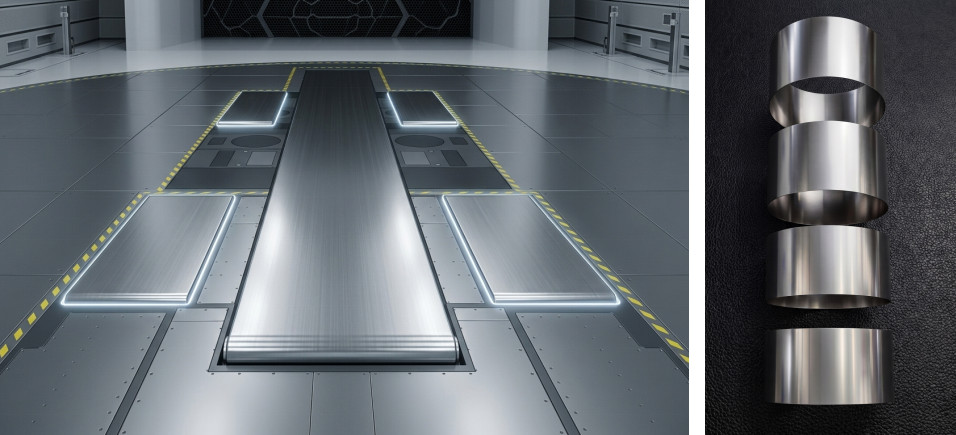
In addition to extremely high physical strength such as tensile resistance, fatigue resistance, and high temperature resistance, the endless steel belts used in automotive wind tunnel testing centers also needs to meet extremely strict precision conditions such as high-speed straight-line operation and overall flatness. Even a slight fluctuation can interfere with the experiment and cause distortion of the test data.
In addition, customized treatment of the steel strip surface is also required. On the one hand, it simulates the friction force of different road surfaces, and on the other hand, it eliminates reflection and prevents interference with the optical tracking lens of the testing equipment.
A complete solution from customization to delivery
With more than 14 years of expertise in the manufacturing of endless steel belts and continuous forming belts, Mingke has developed extensive experience in meeting highly customized and demanding application requirements. For automotive wind tunnel testing systems, we not only supply high-quality endless steel belts that meet stringent performance standards, but also provide comprehensive turnkey solutions tailored to customer-specific requirements:
√ Customize the size and surface coating of the steel strip according to the wind tunnel single belt or five belt system structure;
√ Experienced engineering team, on-site endless welding, tension control, and dynamic balancing debugging;
√ 24-hour response, 48 hour on-site engineer service, providing technical support for the long-term stable operation of your equipment;
At present, Mingke wind tunnel test endless steel belt has been successfully delivered and put into practical application in the automotive wind tunnel testing center, providing accurate underlying data guarantee for each wind tunnel test in a stable and reliable manner.

Post time: Jun-18-2026